
- How to Display Tax-Inclusive Prices in LatePoint
- Bundled Services
- Managing Bookings With The New Shopping Cart
- Set custom start date for the calendar on your booking form
- How to make Phone Number a required field?
- How to Show Only Services or Only Bundles in a Booking Form
- How to Set Base Fee for Group Bookings
- How to Show Custom Display Price for Bundles
- Add booking form directly on a page
- Redirect to a custom “Thank you” page after booking is complete.
- Add custom content before or after booking steps
- Customize Book Button Appearance
- Add preselected Agent, Service or Location on Book Appointment Button or Form
- How to change time slot style on the calendar?
- Custom CSS for changing colors
- Booking Form Editor
- Specify which services, agents and locations will be available on a booking form
- How to pick specific categories to be displayed on the booking form
- How to show only services from specific category
- Set custom fonts for the booking form
- How to setup Facebook Pixel
- How to Disable the Messaging Functionality in LatePoint
- How to upgrade to Version 5?
- How to Update to Version 5.1.0
- Which addons are part of a PRO bundle in version 5?
- How to deactivate my license from a website I no longer use.
- Redirect to a custom “Thank you” page after booking is complete.
- How to add a link to terms of service checkbox custom field
- Edit content of the left panel section
- How to enable self hosted Google Calendar setup?
- Add a trigger to custom element to open a booking form
- How to Create Payment Links in LatePoint
- How to Manage Assets
- How to Pre-fill Customer Fields from URL Parameters
- How to allow agents log into their own dashboard to manage their schedules and appointments
- Generate Client ID and Secret for Google Calendar integration
- How to Completely Remove All LatePoint Data on Plugin Deletion
- How to Automatically Delete Old Activity Log Entries
- Understanding Payment Processing Fees
- How to Issue Refunds in LatePoint
- How to Use Invoices in LatePoint
- How to Hide the “New Appointment” Button and Tab on the Customer Dashboard
- How does LatePoint send emails?
- How to enable debug log?
- Add to Calendar link is not working
- Getting “One of the plugins is invalid” error when installing add-ons
- Error: unexpected ‘int’, expecting function…
- Service categories not showing during booking process
- Error: Cannot read properties of null (reading: verifyBuyer)
- WordPress Users still can’t login, even when “Use WordPress users as customers” option is checked
- New service is being created when trying to update existing service.
- Auto-sync of events from Google Calendar is not working
Generate Client ID and Secret for Google Calendar integration
Note: This method is only applicable if you have enabled self-hosted Google Calendar integration as described in the documentation linked here: http://latepoint.com/docs/how-to-enable-self-hosted-google-calendar-setup/
In order for your agents to connect their Google Calendar to LatePoint – you need to create a Google API project for your website to generate OAuth credentials.
Creating new Google API project
To start visit Google Developer Console https://console.developers.google.com and click Create to create new project:

Give your project any name you want and click “create” button:

Enable Calendar API:

Search for “calendar” and click on Google Calendar API:

Enable Google Calendar API
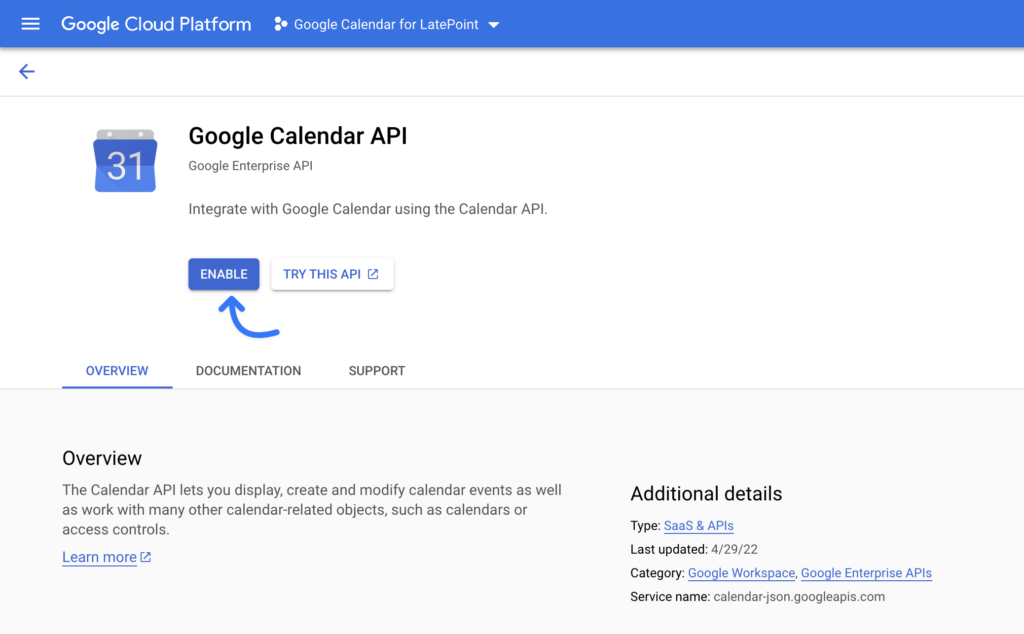
Now you need to create credentials for your project:
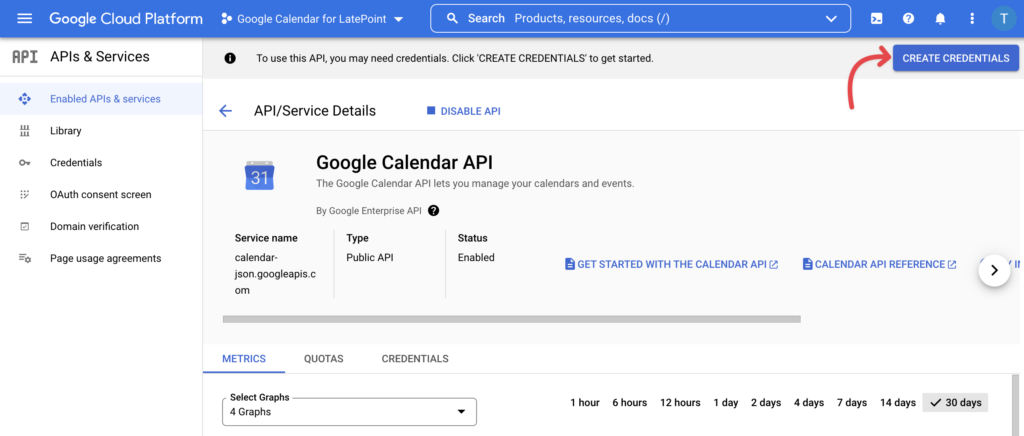
Creating Credentials
Creating credentials for your application is a 5 step process, at the end of the process you will get your generated client ID and client secret. Follow these steps to create credentials for your application:
1. Credential Type
Select User Data and click next:
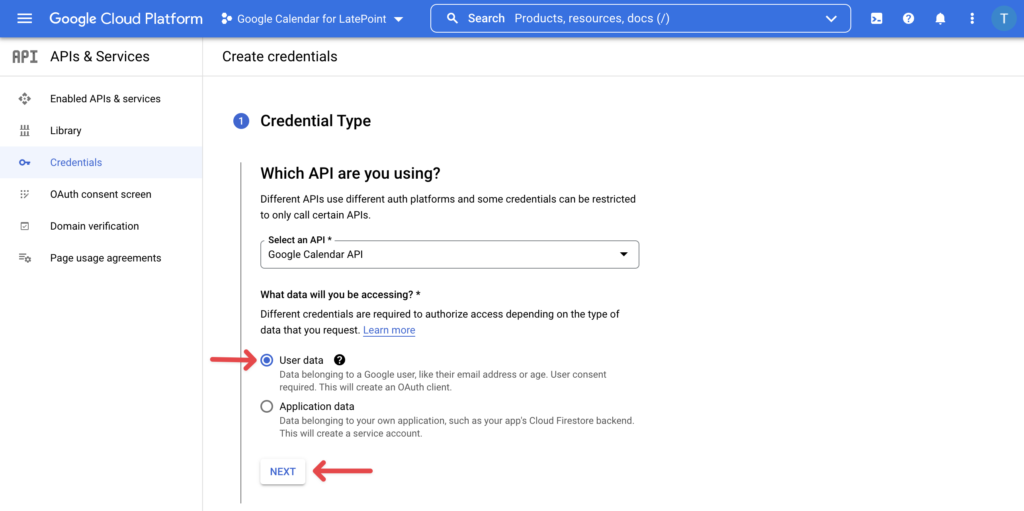
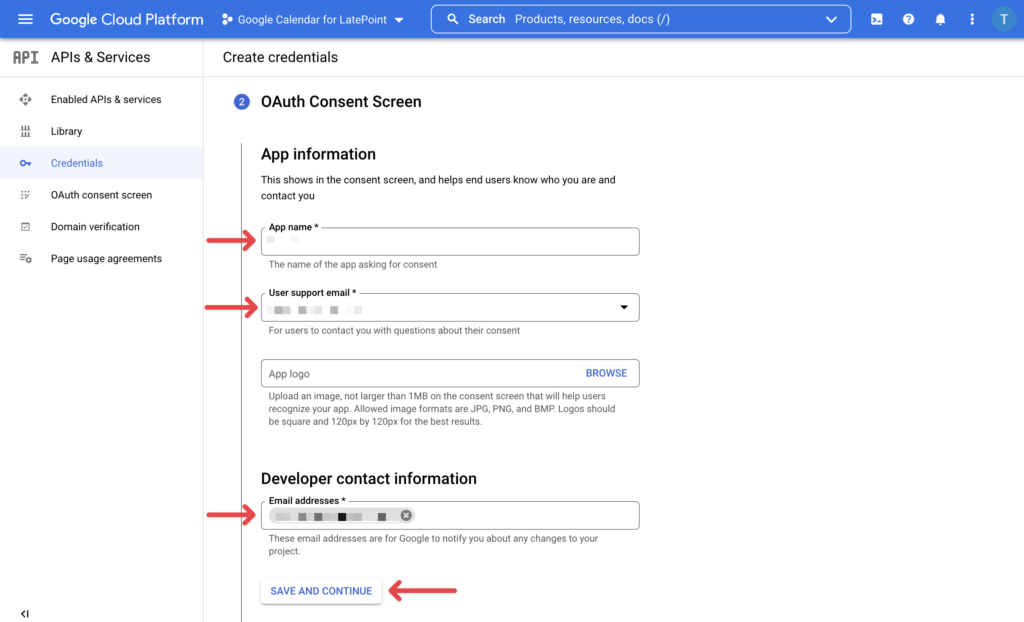
2. OAuth Consent Screen
Enter your application information, which will be shown on a consent screen when your agents are connecting their Google Calendar:
3. Scopes
You need to add scopes that your application will collect from agents who sync their calendars.
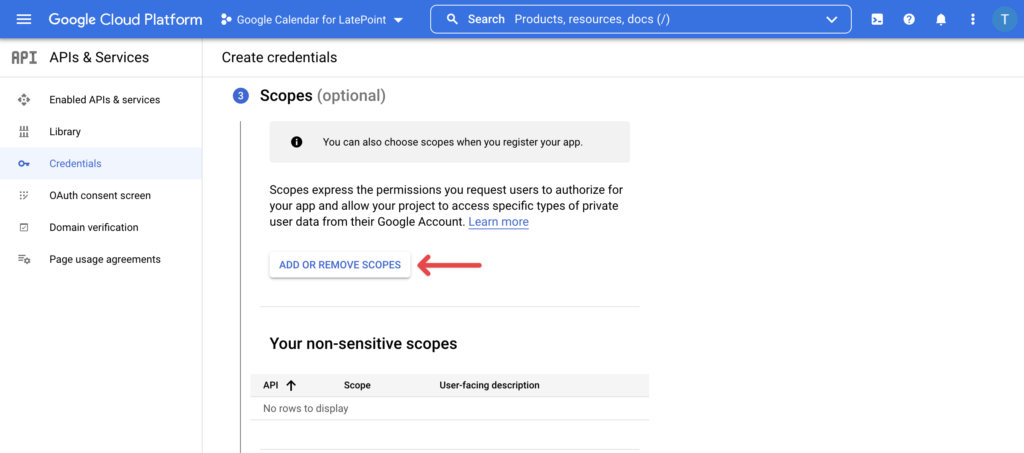
Search for “calendar” and pick Google Calendar API scope (!important, pick the one that says …/auth/calendar). Scroll down and click “Update” button to save it.
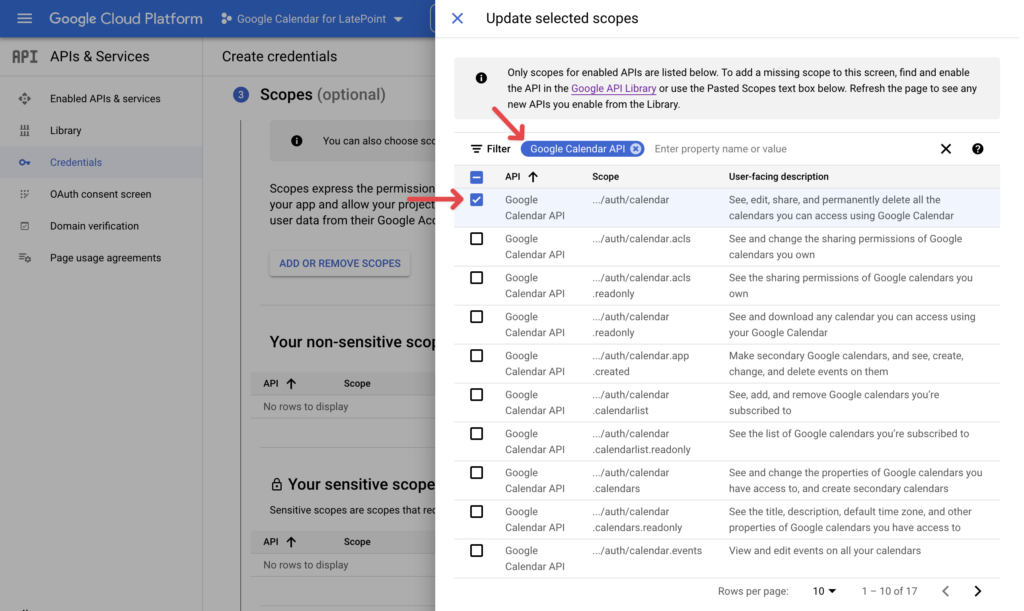
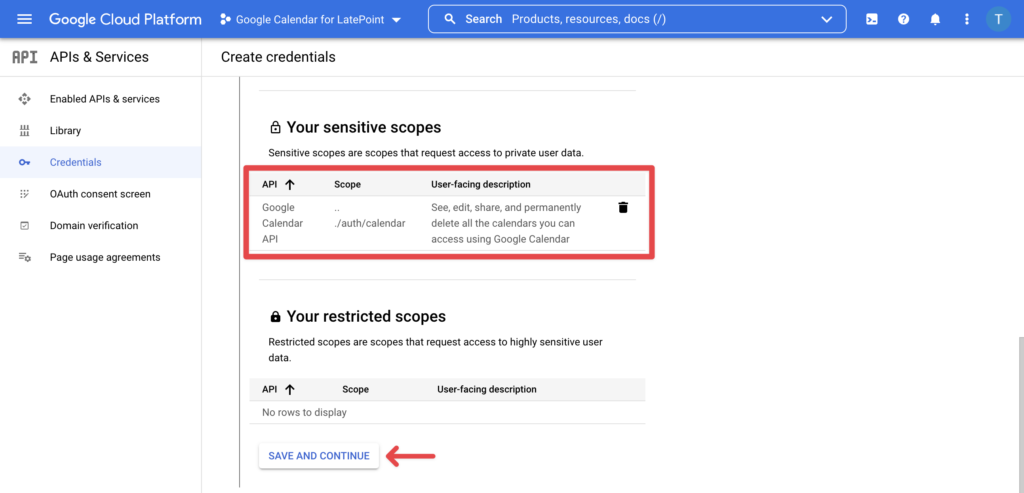
You should see that scope being added to the list of “Your sensitive scopes”. Now hit Save and Continue button
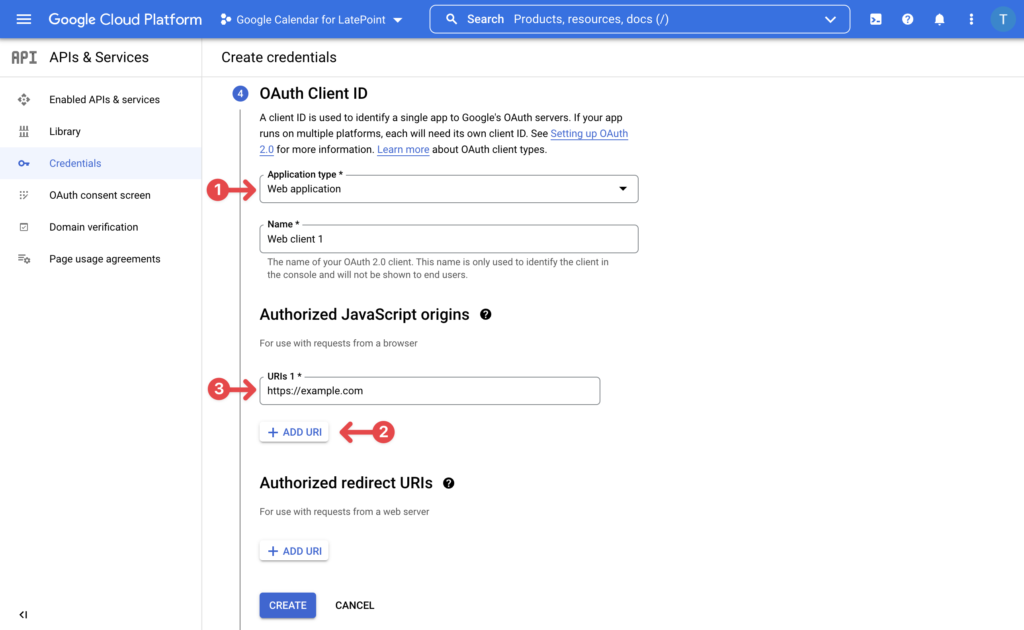
4. OAuth Client ID
Select “Web Application” for the Application Type, then add your site URI in “Authorized JavaScript Origins” section:
Note: It may take 5 minutes to a few hours for settings to take effect
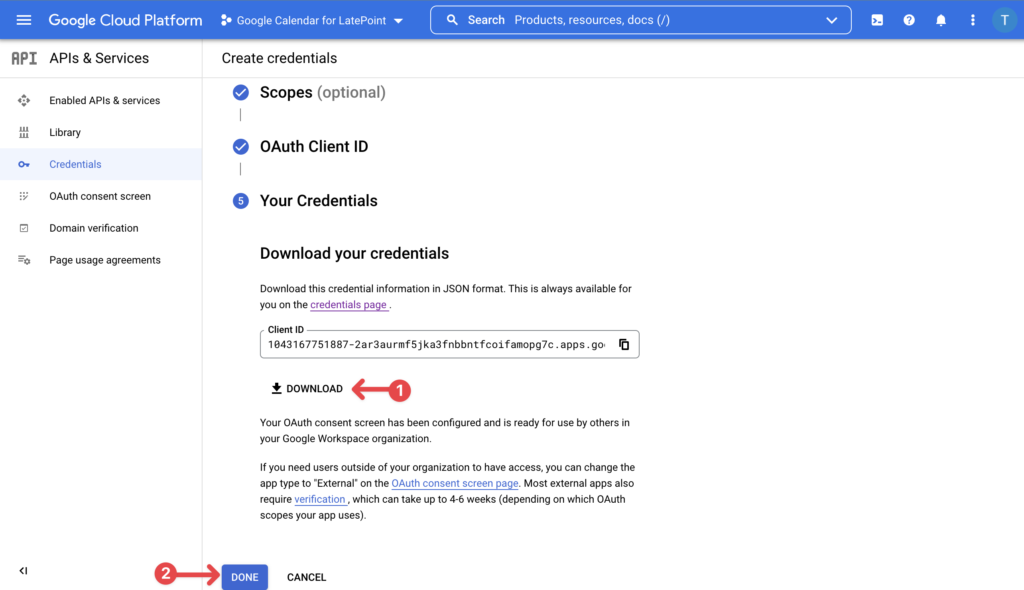
5. Your Credentials
You can now download your credentials in a json file
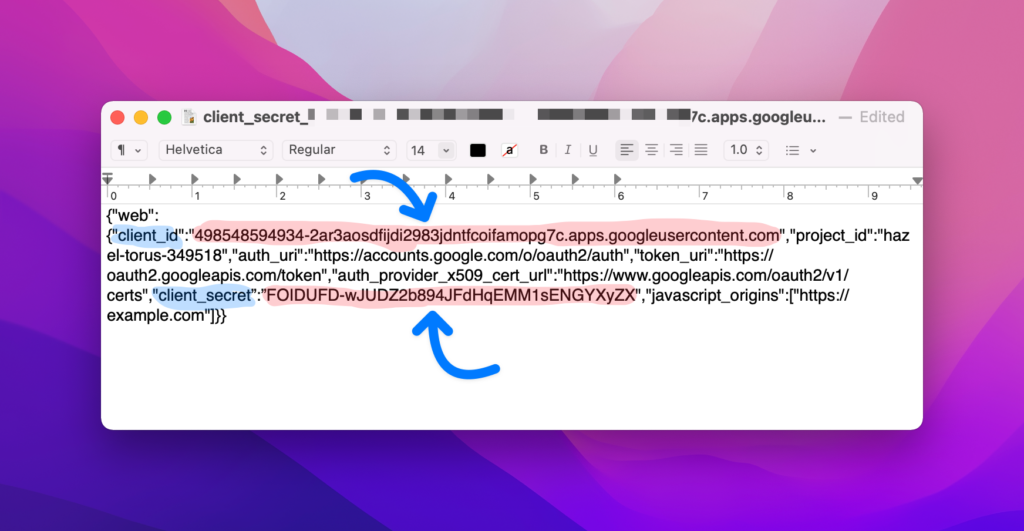
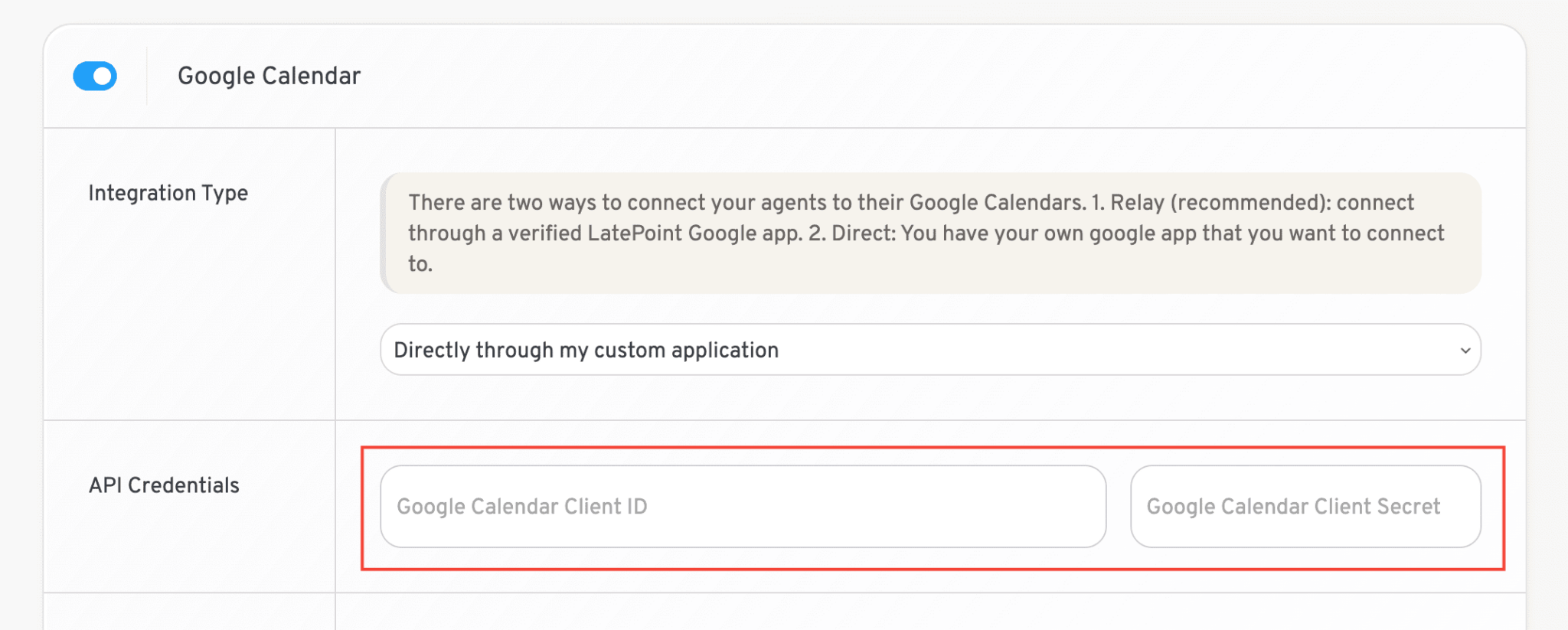
Open the .json file your downloaded and search for client_id and client_secret values, copy them (do NOT include quotes) and paste into your LatePoint Google Calendar Settings:
External vs Internal User Type
There are two user types available in Google Application: Internal and External. By default Google sets your application’s user types to “Internal”. You can read more about differences between them by clicking here.
Important!
Authorizations by a test user will expire seven days from the time of consent. If your OAuth client requests an offline access type and receives a refresh token, that token will also expire. It means that your external test agents will have to “Sign in with Google” every 7 days to be able to automatically sync their calendars.
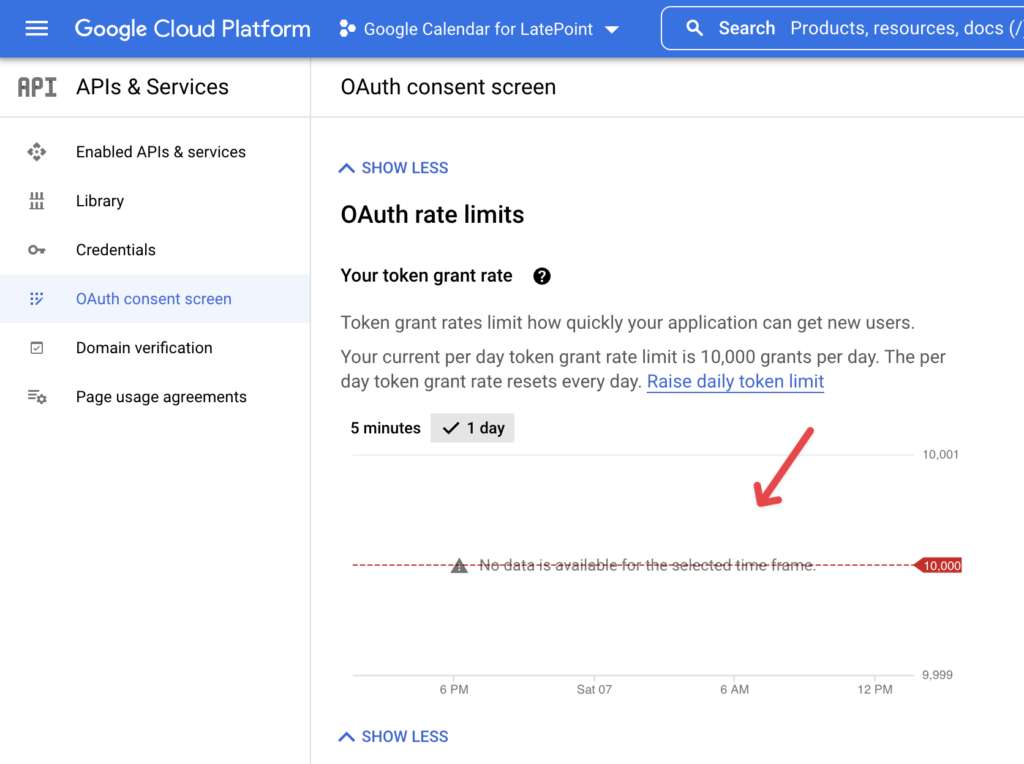
Testing mode also comes with some Rate limitations. If you are having trouble with auto-syncing calendars – make sure you are not hitting your Rate limits:
We don't respond to the article feedback, we use it to improve our support content.